top of page
Loose leaf tea and a mug with a tea infuser, used as a hero image for how much caffeine is in tea.

Tea and Caffeine Levels: How Much Is in Your Cup?
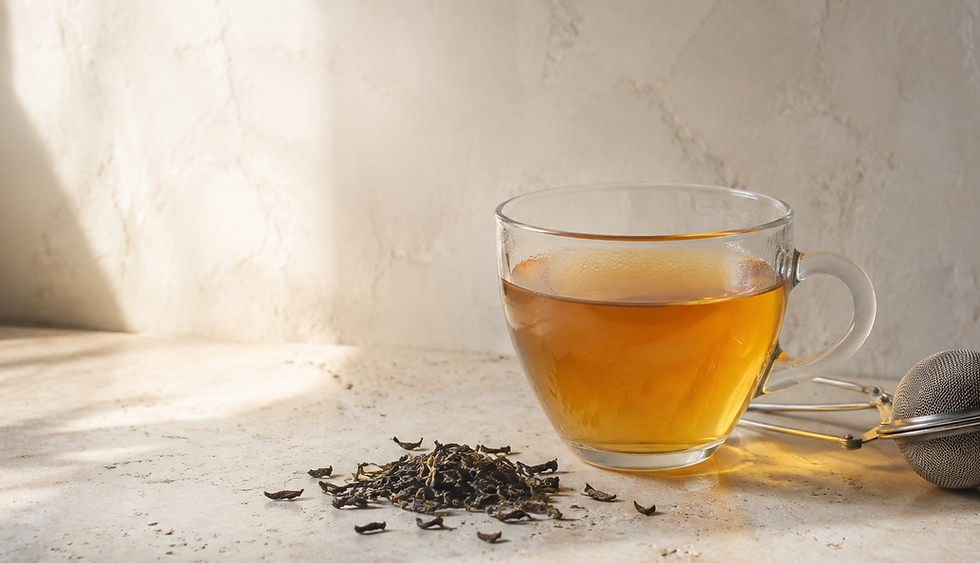
Most of us only start asking how much caffeine is in tea when something in our routine feels slightly off. It might be a run of post-lunch jitters, a few nights of lighter sleep, or the sense that your usual coffee has quietly become “too much”. Understanding tea and caffeine levels – and how the caffeine in a cup of tea compares with your morning coffee or even a can of Coke Zero – is really about regaining a steadier, more predictable lift.

In this guide, we keep things clear and calm. You’ll find a simple tea caffeine chart (mg per mug), side-by-side comparisons of black, green, white, oolong, matcha and ripe pu-erh with different coffees and soft drinks, plus an honest look at decaf. We’ll also touch on the widely used 400 mg-per-day caffeine guideline and how that translates into real cups across your day, from focus in the morning to winding down at night. New to loose leaf tea? We’ll link you to our main loose leaf guide so you can match these numbers with confident, unhurried brewing.

Loose leaf black tea and black tea bags beside brewed tea for a caffeine comparison.

How Much Caffeine Is in a Cup of Tea?

A typical 240 ml mug of black tea contains about 40–70 mg of caffeine, green tea around 20–45 mg, and white tea roughly 15–30 mg. In short, the caffeine in a cup of tea is usually about half that of a standard mug of coffee, although the exact amount always depends on the specific tea, the leaf-to-water ratio, and how long you brew it.

Knowing these tea and caffeine levels can be helpful if you’re trying to keep a steadier energy curve through the day – perhaps you feel a little wired after coffee, or notice an afternoon dip and want a gentler, more predictable lift instead of another hard jolt. Tea gives you room to adjust: by choosing different types and brewing styles, you can nudge the caffeine in your cup up or down without over-thinking it.

In the chart below, we break these levels down by type – from everyday British tea bags to loose-leaf black, green, white, oolong, matcha and ripe pu-erh – so you can see at a glance how much caffeine is likely to be in your own mug.

Drink (250ml)
Approximate caffeine
Typical feel
Brewed coffee (Reference)
95–140 mg
Sharp Jolt
Matcha Green Tea
60–120 mg
Strong Lift
Black Tea
40–60 mg
Steady Alertness
Ripe Pu-erh Tea
30–60 mg
Grounding Warmth
Oolong Tea
30–50 mg
Balanced Lift
Yellow Tea
30–45 mg
Mellow & Smooth
Green Tea
20–45 mg
Gentle Refresh
White Tea
15–30 mg
Soft & Delicate
English Breakfast tea and Earl Grey tea shown side by side for a black tea caffeine comparison.

Black Tea (English Breakfast, Earl Grey & Everyday Tea Bags)

For most people in the UK, black tea with caffeine simply means a strong mug of English Breakfast, Earl Grey, or a familiar “builder’s tea” bag. Brewed in a 240 ml mug with one bag for 3–5 minutes, these everyday black teas typically deliver somewhere between 40 and 60 mg of caffeine per cup. That puts them comfortably below a standard coffee, but still high enough to give a clear, steady lift.

How much caffeine is in Yorkshire Tea and everyday bags?

When people ask “how much caffeine is in Yorkshire Tea?” (or similar blends from Tetley and PG Tips), the answer usually falls into that same 40–60 mg per mug band for a typical brew.

  • A standard brew (around 3 minutes) tends to sit in the 40–50 mg range.

  • A strong “builder’s” brew (5 minutes or more) can push towards 60–70 mg.

  • Note: Adding milk does not lower the caffeine amount; it just dilutes the strength of the bitterness.

English Breakfast vs Earl Grey

Is there a significant difference between these two favourites?

  • English Breakfast – designed to be punchy and robust. If you are wondering how much caffeine is in English Breakfast tea, you can usually expect it towards the higher end of the range, roughly 50–70 mg per 240 ml mug, especially when brewed for a full 3–5 minutes.

  • Earl Grey – often perceived as lighter. For how much caffeine is in Earl Grey tea, the typical range is around 40–60 mg, largely because many people brew it a little shorter to protect the delicate bergamot aroma.

If you enjoy a few black teas across the day, keeping this 40–70 mg range in mind helps you roughly tot up your intake while still keeping your daily ritual simple and enjoyable.

Green, White & Oolong Tea Caffeine

Green, white and oolong teas are often chosen when people want something gentler than a strong black tea, but it is worth being clear: all three still contain caffeine. In a typical 240 ml mug, green tea usually sits around 20–45 mg, white tea around 15–30 mg, and oolong somewhere in the 30–50 mg range. That puts them significantly lower than most coffees per cup, but they are not “caffeine-free”.

Green tea: is green tea caffeinated?

Yes – green tea is caffeinated. If you are wondering how much caffeine does green tea have, a standard mug will usually fall between 20 and 45 mg. The range comes down to leaf grade, how much you use, and water temperature. Brewing with cooler water (around 70–80°C) not only helps prevent bitterness, it tends to extract slightly less caffeine than boiling water. Because of this gentler lift, many people find that late morning or early afternoon is the best time to drink green tea – enough focus to stay alert, without tipping into the jitters.

White tea: does white tea contain caffeine?

Yes. Despite the pale liquor and delicate flavour, white tea does contain caffeine. Most everyday white teas sit in the 15–30 mg per 240 ml mug range. An important nuance: bud-heavy styles (such as Silver Needle) can be higher because young buds naturally carry more caffeine to help protect the plant. So if you are searching “does white tea have caffeine”, the answer is yes – usually a little less than many green teas, but still enough to notice if you are highly sensitive.

Oolong tea: what is oolong, and does it have caffeine?

Oolong tea sits between green and black in both flavour and strength. It is partially oxidised, which gives it the distinctive floral, nutty or gently roasted character people are asking about when they search “what is oolong tea” or “what does oolong tea taste like?”. In terms of caffeine, a typical mug of oolong will usually contain around 30–50 mg. So for questions like “does oolong tea have caffeine” or “is oolong tea caffeinated”, the practical answer is yes: it tends to be a comfortable mid-range option – a little softer than many black teas, but often stronger than delicate whites.

If you need strictly zero caffeine, remember that only herbal infusions – such as chamomile, peppermint or rooibos – are naturally caffeine-free. These can be useful in the evenings, while green, white and oolong teas can sit earlier in the day as part of a gentler, more measured caffeine routine.

Matcha & Powdered Teas

Among all the teas in this guide, matcha is the one that tends to surprise people most. It is still green tea – not coffee – but because the leaf is finely milled into a powder and whisked into water, you drink the whole leaf, not just an infusion. That is why matcha often feels stronger and more “awake” than a standard green tea bag.

What’s inside matcha?

If you are wondering what is inside matcha, it is simply shade-grown green tea (Camellia sinensis) that has been steamed, dried, and stone-milled into a fine powder. Shading the plants before harvest encourages higher levels of chlorophyll and certain amino acids. When you drink matcha, you take in the whole leaf particles suspended in water, so the flavour and caffeine can feel more concentrated per sip than a regular brewed green tea.

Is matcha caffeinated – and how much caffeine does it have?

Yes, matcha definitely contains caffeine. If you are asking how much caffeine is in matcha or does matcha have a lot of caffeine?, it helps to think in terms of how much powder you use:

  • Everyday serving (about 1 tsp / ~2 g powder, 240 ml water): often around 60–80 mg of caffeine.

  • Café-style lattes or stronger bowls (multiple teaspoons or larger cups): can climb higher, sometimes in the 100–120 mg range.

This puts matcha above most regular green teas and many black teas per cup, though usually still below a strong espresso-based coffee. Because you are drinking the leaf itself, the exact caffeine in matcha depends heavily on how much powder goes into the bowl or latte and whether you are making a light, everyday whisked matcha or a richer, ceremonial-style version.

Is matcha caffeinated – and how much caffeine does it have?

For newcomers searching what does matcha taste like or what does matcha tea taste like, the flavour can be a surprise. It is not naturally sweet or syrupy like a flavoured latte unless sugar is added. Good matcha is usually:

  • smooth and creamy in texture,

  • distinctly vegetal and grassy,

  • with gentle sweetness and a rounded umami character.

Lower-quality powders can taste flat, dusty, or sharply bitter, which is often what puts people off if their first experience is from a very cheap blend.

Matcha vs coffee – the short answer

When people compare matcha vs coffee, they are usually weighing up both caffeine and how it feels. A standard 240 ml mug of brewed coffee often falls around 80–100 mg of caffeine, while a typical home-prepared matcha usually sits a little lower, around 60–80 mg, unless you make it very strong. Many drinkers describe matcha’s effect as a more steady, focused alertness rather than a sharp spike, partly because green tea naturally contains the amino acid L-theanine. We explore the full tea-vs-coffee comparison later in this guide.

What about other powdered teas?

Matcha is not the only powdered option on the shelf. You might also see:

  • True tea powders – such as black tea powder, hojicha tea powder, or some instant “tea powder” blends. If the base is real tea leaf (green, black, oolong), these will contain caffeine, sometimes approaching matcha levels if the powder is concentrated and you use several scoops.

  • Herbal and spice powders – for example, ginger and turmeric powder tea, lemon tea powder without real tea leaf, or fruit-based mixes. These are often naturally caffeine-free, unless tea extract has been added.

  • Commercial chai or latte powders – chai tea latte powder, instant iced tea mixes and similar often include sugar, milk powder, and flavourings. The actual tea content (and therefore caffeine) can be lower per spoon than pure matcha or straight tea powder.

If you enjoy the focused lift of matcha or other powdered teas, it is sensible to count them closer to a coffee-level drink in your daily caffeine total, rather than assuming they behave like a very light green tea – especially if you are already drinking coffee elsewhere in your day.

How Brewing Changes Caffeine in Your Cup

The caffeine in a cup of tea is not a fixed number on the box – it changes with how you brew. Steep time, water temperature, and how much leaf you use all influence the final caffeine level just as much as the tea type itself.

Does brewing tea longer add more caffeine?

Yes, up to a point. Caffeine is relatively quick to extract, but it is not instantaneous:

  • Short steep (1–2 minutes): extracts less caffeine and gives a lighter taste.

  • Standard steep (around 3 minutes): the “everyday” range for most black and green teas.

  • Strong brew (5 minutes+): a classic “builder’s brew” pulls more of the available caffeine into the cup, but also releases more tannins – which is why over-brewed tea can taste harsh or bitter.

So if you are wondering how much caffeine is in a cup of black tea or breakfast tea, remember that a long steep will usually sit towards the top of the range.

Water temperature & tea type

Searches like how to make green tea or how to brew oolong tea often appear because temperature is just as crucial as time:

  • Green & white tea: typically brewed at 70–80°C. This gentler heat helps avoid bitterness and usually extracts slightly less caffeine than boiling water.

  • Black tea & ripe pu-erh: usually brewed near 100°C, releasing caffeine more quickly and more completely.

If you brew a delicate green tea with fully boiling water for a long time, its caffeine level can creep closer to that of a mild black tea.

Multiple infusions, rinsing & iced tea

  • Re-steeping: with good loose leaf, most of the caffeine is released in the first infusion. Each subsequent cup from the same leaves will generally be lower in caffeine.

  • Rinsing the leaves: a quick rinse (often used with oolong or pu-erh) removes a small amount from that first cup, but does not make the tea caffeine-free.

  • Cold brew / iced tea: yes, iced tea has caffeine if it is made from real tea leaves. Cold water extracts caffeine more slowly, but over a long steep (often 8–12 hours) a cold brew can still deliver a noticeable dose – just with a smoother, sweeter finish.

For exact timings, temperatures, and leaf-to-water ratios for each style, you can follow our step-by-step Loose Leaf Brewing Guide.

Loose leaf tea and coffee beans above a section comparing caffeine in tea and coffee.

Caffeine in Tea vs Coffee

When people ask “does tea have more caffeine than coffee?” the answer is usually no — a mug of coffee typically contains more caffeine than a mug of tea.

To give a practical UK reference point, the NHS lists around 75mg in a mug of tea, compared with 100mg in a mug of instant coffee and 140mg in a mug of filter coffee. These are averages (brand, mug size, and brew strength all matter), but they’re a sensible baseline for day-to-day comparisons.

Tea vs a Standard Mug of Coffee

It helps to compare the drink in your hand, not dry leaves versus beans.

  • The "Dry Leaf" Myth: It is true that dry tea leaves often contain more caffeine by weight than dry coffee beans. However, we usually use far less tea (2–3g) than coffee (10g+) to make a cup. Therefore, the final brewed drink is almost always weaker.

Comparison by Mug (UK Reference Values) If you are searching "how much caffeine in black tea vs coffee", here is the typical breakdown per 240ml mug:

  • Tea (black or green): ~75mg

  • Instant coffee: ~100mg

  • Filter coffee: ~140mg

Note: These figures are averages. A weak tea might be as low as 40mg, while a strong roasted coffee can exceed the average.

Instant coffee, loose leaf tea and espresso shown side by side for a caffeine comparison.

Espresso, Flat White & Instant Coffee

Many “tea vs coffee” searches are really about coffee-shop favourites — especially espresso-based drinks. If you’re wondering “how much caffeine in a flat white”, the answer depends on the recipe and shot count.

Drinks
Serving
Typical caffeine
Notes
Single espresso
30 ml
~63 mg
Concentrated base for many drinks.
Double espresso
60 ml
~125 mg
The standard base for most UK high-street coffees.
Flat white
280 ml
~115–160 mg
Starbucks UK lists ~115.6mg for their flat white. Other cafés vary.
Instant coffee
240 ml
~85–100 mg
Strength depends heavily on the spoon size.
Standard tea
240 ml
~75 mg
For comparison.

The takeaway: if you’re feeling overstimulated, a flat white can easily land around 1.5×–2× the caffeine of a typical mug of tea (depending on the café). Swapping just one coffee for tea can noticeably reduce your daily total — without losing the ritual.

(For general context: UK-facing guidance commonly references up to ~400mg/day as a safe total for most healthy adults, and no more than 200mg/day in pregnancy.)

Does Decaf Tea Have Caffeine?

Does decaf tea have caffeine? Yes — decaf tea still contains a tiny amount of caffeine, so it isn’t completely caffeine-free. A typical cup (8oz / 237ml) of decaf black tea contains around ~2mg, compared with ~75mg in a mug of regular tea (UK guidance). It should also be noticed that decaf tea is usually not considered a diuretic and won’t dehydrate you.

How Decaf Tea Is Made (And What Remains)

What is decaf tea? It’s real tea (Camellia sinensis) that has had most of its caffeine removed before packaging.

Decaffeination varies by producer, but the process generally looks like this:

  • The leaves are moistened or steamed to open their structure

  • Caffeine is extracted using one of several methods below

  • The tea is dried and packed as normal

You’ll most often see three approaches discussed:

  • CO₂ (carbon dioxide) decaffeination
    Uses pressurised CO₂ to selectively remove caffeine. It’s popular partly because it avoids traditional solvent rinses, and many brands choose it for a “clean” positioning.

  • Solvent methods (e.g., ethyl acetate or dichloromethane / methylene chloride)
    These are widely used in decaffeination, and they are regulated: the Food Standards Agency notes extraction solvents can be used to remove caffeine, and any residues must remain within legal limits. The Royal Society of Chemistry describes these solvents as predominant in decaffeination processes.

  • Water-based processes
    These rely on water extraction and filtration. They can work well, though the exact approach varies and may influence taste.

What remains? No method removes caffeine perfectly, so a trace amount usually remains — and the flavour can shift a little too, which is why some people feel decaf tea tastes different (often slightly softer or less brisk)

How Much Caffeine Is in Decaf Tea?

So, does decaf tea have caffeine / is there caffeine in decaf tea?
Yes — but usually only a few milligrams.

A defensible reference point is:

  • Decaf black tea: ~2mg per 8oz (237ml) cup

For context, NHS guidance gives a practical UK “mug” baseline for caffeinated drinks:

  • One 240ml mug of tea: ~75mg 

What this means in practice: even if you’re searching “how much caffeine in decaf tea” because you’re trying to reduce jitters or protect sleep, decaf is typically so low that it’s negligible for most people — though those with extreme sensitivity may still notice it.

Is Decaf Tea Good for You? (And Is It a Diuretic?)

People commonly ask: “is decaf tea good for you?”, “is drinking decaf tea good for you?”, or even “is decaf tea bad for you?” The fairest answer is:

For most people, decaf tea is a perfectly reasonable choice, especially if it helps you enjoy tea while keeping caffeine low.

Is decaf tea a diuretic / does decaf tea dehydrate you?

Generally, no. The British Heart Foundation states that because decaf tea and coffee have almost no caffeine, they’re not considered diuretic and will not dehydrate you.

Is decaf tea bad for your kidneys?

For most healthy adults, there’s no strong reason to see decaf tea as inherently “bad” for kidneys. Where this becomes more nuanced is kidney stones, especially oxalate stones: NHS kidney-stone dietary leaflets often note that tea and coffee contain moderate oxalate and may advise moderation (commonly no more than two to three cups per day in that specific context), sometimes suggesting milk can reduce oxalate absorption. If you have a diagnosed kidney condition, it’s worth checking your clinician’s advice.

Quick Clarifiers

  • Is decaf green tea good for you / is decaf green tea healthy? Usually yes — it’s still tea, just with very low caffeine.

  • What tea is decaf / is Earl Grey tea decaf? Earl Grey is normally a caffeinated black tea, but you can buy decaf Earl Grey specifically labelled as such.

  • Is rooibos (redbush) tea decaf? Rooibos is naturally caffeine-free, rather than “decaffeinated” (decaffeinated tea still contains a trace of caffeine).

  • Can dogs have decaf tea? Best avoided — even trace caffeine can be harmful to dogs.

Daily Caffeine & Health Conscious Choices

If you are trying to drink tea more mindfully—for steadier energy, calmer focus, or better sleep—the most useful shift is to think in terms of daily total caffeine, not just single cups.

A practical UK baseline (often used in NHS guidance) is:

  • Mug of Tea: ~75 mg

  • Mug of Instant Coffee: ~100 mg

  • Mug of Filter Coffee: ~140 mg

How Much Caffeine Per Day Is "Too Much"?

  • General Guidance: For most healthy adults, UK safety advice commonly references ~400 mg per day as a safe upper limit.

  • Pregnancy Guidance: During pregnancy, the NHS advises limiting intake to 200 mg per day.

This helps explain why there is no single answer to "how many cups of tea a day is too much." It depends entirely on your mug size, how strong you brew it, and what else you drink (cola, energy drinks, etc.).

Timing Matters for Sleep

If your priority is better sleep, timing is just as important as the total amount.

  • The "6-Hour Rule": Caffeine can take up to six hours to wear off. Many sleep hygiene experts suggest avoiding caffeine after 2pm.

  • Does Tea Make You Sleepy? No, tea does not usually make you sleepy because of the caffeine. However, the warmth and ritual can be relaxing. If you crave that comfort in the evening, swap to decaf tea or naturally caffeine-free options (like Rooibos) to keep the ritual without the stimulation.

Hydration & "Diuretic" Worries

A common worry is: "does tea dehydrate you?"

  • The Verdict: Generally, no. The British Heart Foundation notes that moderate intake (around 4–5 cups a day) is compatible with good hydration.

  • Decaf: Decaf tea and coffee have almost no caffeine, so they are not considered diuretic and act just like water for hydration purposes.

Health-Conscious Ways to Lower Intake

If you want to reduce caffeine without losing the joy of tea:

  1. Shift Your Routine: Enjoy your "proper" strong tea in the morning and switch to decaf after lunch.

  2. Watch Hidden Caffeine: Remember that cola, chocolate, and energy drinks count towards that 400 mg total.

  3. Adjust the Dial: Use smaller mugs or shorter steeps rather than quitting cold turkey.

(Note: If you have a heart condition, anxiety, reflux, or kidney concerns, always check with your clinician about what "moderate" means for you.)

Caffeine in Tea vs Coke Zero, Cola & Soft Drinks

It isn’t just hot drinks that shape your daily caffeine intake. A mid-afternoon can of cola can feel “lighter” than coffee — but it still counts, especially if you’re trying to reduce jitters or improve sleep.

Does Coke Zero Have Caffeine?

Yes — standard Coke Zero Sugar contains caffeine. The “Zero” refers to sugar, not stimulants. The only exception is a clearly labelled caffeine-free version (if you buy that specific product).

How much caffeine is in Coke Zero?

On UK-style product listings, it’s often shown at around ~32mg per 330ml can (but recipes can vary, so always check the label).

A useful reality check: UK public guidance commonly uses ~40mg caffeine per can of soft drink (cola) as a general reference point.

How Much Caffeine Is in Coke Zero, Diet Coke & Cola?

If you’re searching “how much caffeine is in a can of coke” or “does coke contain caffeine”, here are UK-relevant reference values for a 330ml can:

Drink (330ml can)
Typical caffeine
Notes
“Cola / soft drink” (general guide)
~40 mg
Used in UK public guidance as a rough benchmark
Coke Zero Sugar
~32 mg
Varies by recipe
Diet Coke
46 mg
Coca-Cola GB published figure
Coca-Cola (Classic)
34 mg
Coca-Cola GB published figure

Tea context (for comparison): UK guidance often quotes ~75mg in a mug of tea, but real-world cups vary a lot with leaf amount and brew time.

Caffeine in Coke, Pepsi & Dr Pepper

While cola is comparable to tea, other soft drinks can vary wildly. Search data shows high interest in Pepsi Max, Dr Pepper, and energy drinks like Monster.

Here is how the soft drink aisle stacks up against your tea cupboard:

Drink
Typical caffeine
Comparison to Tea
IRN-BRU (330ml)
~30 mg
Similar to Green Tea
Lucozade Energy Original (380ml)
46 mg
Similar to Black Tea
Monster Energy (500ml)
160 mg
Equal to ~4 mugs of tea or a strong double coffee
Dr Pepper (330ml)
~42 mg
Similar to Black Tea
Pepsi Max (330ml)
~43 mg
Similar to Black Tea

Key Takeaway: Most standard colas sit in the "Tea Range" (30–50 mg). However, energy drinks like Monster act very differently, delivering a massive, concentrated dose that far exceeds a relaxing tea ritual.

Dark chocolate bars beside loose leaf tea for a caffeine comparison.

Is There Caffeine in Chocolate?

Yes — caffeine occurs naturally in cocoa solids, so “darker usually means more”. High search volumes for "does hot chocolate have caffeine" and "do cocoa have caffeine" suggest many people are caught out by this.

The Rule of Thumb: Caffeine is found naturally in cocoa solids. Therefore, the darker the chocolate, the higher the caffeine.

  • Dark Chocolate: Yes. A 50g serving of high-percentage dark chocolate can contain 20–40 mg of caffeine—roughly the same as a cup of green tea.

  • Milk Chocolate / Hot Cocoa: Yes, but very little. A mug of hot chocolate usually contains <5–10 mg, making it safe for most people in the evening.

  • White Chocolate: No. Because white chocolate contains cocoa butter but no cocoa solids, asking "does white chocolate have caffeine" gets a simple answer: Zero.

FAQ: Tea, Caffeine & Decaf

How much caffeine is in a cup of tea?

A standard 240 ml mug of black tea typically contains between 40 and 75 mg of caffeine. Green tea is usually lower, ranging from 20 to 45 mg, while white tea sits between 15 and 30 mg. These levels are generally about half that of a standard cup of coffee.

Does brewing tea longer add more caffeine?

Yes. Caffeine extraction is time-dependent. A short steep (1–2 minutes) extracts significantly less caffeine than a long "builder's brew" (4–5 minutes). However, brewing longer also releases tannins, which can make the tea taste bitter.

Does rinsing tea remove caffeine?

Only a small amount. A quick rinse (often used in Gong Fu brewing) washes away dust and some surface caffeine, but it does not make the tea decaffeinated. Most of the caffeine is inside the cellular structure of the leaf and takes minutes to extract, not seconds.

Is green tea caffeinated? / Does herbal tea have caffeine?

Is green tea caffeinated? Yes, absolutely (approx 20–45 mg per cup). Does herbal tea have caffeine? Generally, no. Pure herbal infusions like peppermint, rooibos, and chamomile are naturally caffeine-free. Note that "Yerba Mate" is a herbal exception that does contain high levels of caffeine.

Is there caffeine in chai / chai latte?

Yes. Traditional chai is made from a strong black tea base, so it contains caffeine (typically 30–50 mg). If you order a "dirty chai" or a chai latte with an added espresso shot, the caffeine content will be significantly higher (100mg+).

Is chamomile tea caffeinated?

No. Chamomile is a flower, not a tea leaf from the Camellia sinensis plant. Therefore, pure chamomile tea is naturally 100% caffeine-free and ideal for the evening.

Does decaf tea have caffeine?

Yes, but only a trace amount. Decaf tea typically contains 1–2 mg of caffeine per cup, compared to ~75 mg in a regular black tea. For most people this is negligible, but it is not technically "zero."

Which has more caffeine, tea or coffee?

In almost every standard case, coffee has more caffeine per cup. A typical mug of brewed coffee (100–140 mg) contains roughly double the caffeine of a black tea (~75 mg). While technically dry tea leaves often contain more caffeine by weight than coffee beans, we use far less tea to make a drink, so the final cup is significantly weaker.

The Next Cup, Chosen with Intention.

Understanding tea caffeine levels is the first step towards a steadier day. If you would like to turn these numbers into a simple ritual, here are the most helpful next steps.

Continue your tea journey:

​Still unsure about your routine? Email the Tea Ducks team. We are always refining our guides—if there is a specific question about caffeine or tea health you would like us to cover, please let us know.

bottom of page